Can You Replace Just One Part of a Window in South San Jose Hills?
Some window parts can be swapped on their own, but on older frames a single part rarely fixes the real problem.
Can you replace just one part of a window?
Sometimes, yes. A sealed glass unit, a latch, a screen or a balance can often be replaced on its own. But if the frame is old, bent or leaking, a new part goes into a tired window and the problem comes back. In that case, replacing the whole window is usually the better fix.
Which parts of a window can be replaced on their own?
A window is a few parts working together. There is the frame set in the wall, the sash that holds the glass, the glass itself, and small hardware like latches, rollers and balances. On a newer window in good shape, many of these can be swapped one at a time.
The catch is finding the right part. Many windows put in decades ago were made by companies that changed their lines or closed. If the part is no longer made, a close match may not seal or lock the way it should.
- Sealed glass units, when the frame and sash are sound
- Latches, locks and sash handles
- Screens and screen frames
- Rollers on sliding windows
- Balances on single-hung windows
- Weatherstripping
When does swapping one part stop making sense?
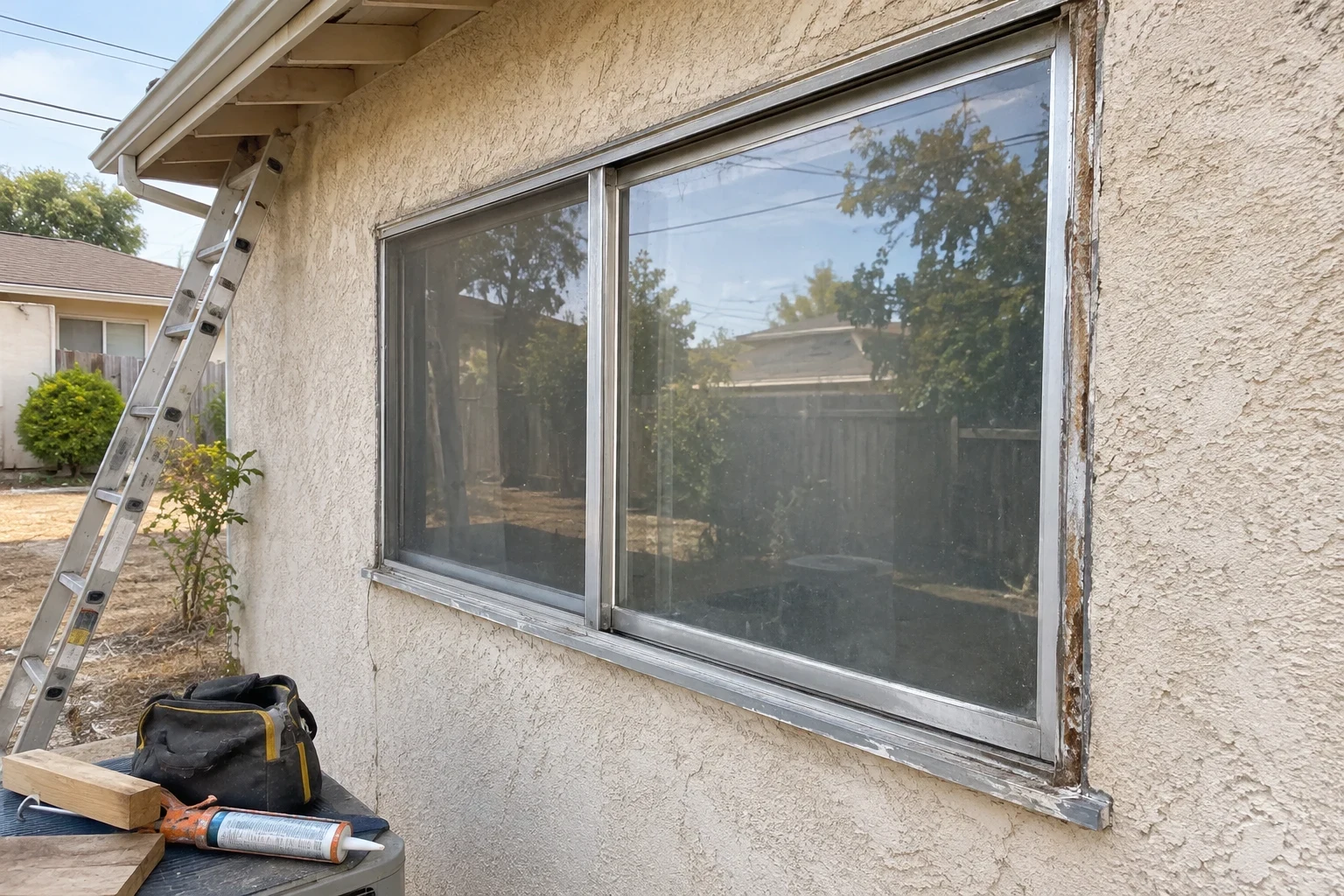
Many homes in South San Jose Hills still have the original aluminum sliders with single-pane glass. Those frames conduct heat straight into the room on a hot summer afternoon. You can put a new latch or new rollers on one, and it will still be a single-pane aluminum window that lets heat and street noise through.
Fogged dual-pane glass is the other common case. The fog means the seal between the panes has failed. If one unit has failed, others from the same batch are often close behind. Replacing glass one window at a time can add up, and you still end up with old frames.
We look at the whole window before we say anything. If the frame is solid and the window is fairly new, we tell you that. If it is worn out, we show you what we see and explain why a new window will hold up better.
- The frame is bent, corroded or pulling away from the wall
- Water gets in around the frame, not just the glass
- More than one window in the house is fogging
- Parts for that window are no longer made
- The window is single-pane and the room runs hot or loud
Can you replace one window instead of every window?
Yes. You do not have to do the whole house at once. Plenty of homeowners start with the worst window, often a west-facing bedroom or the big living room slider, and do the rest later.
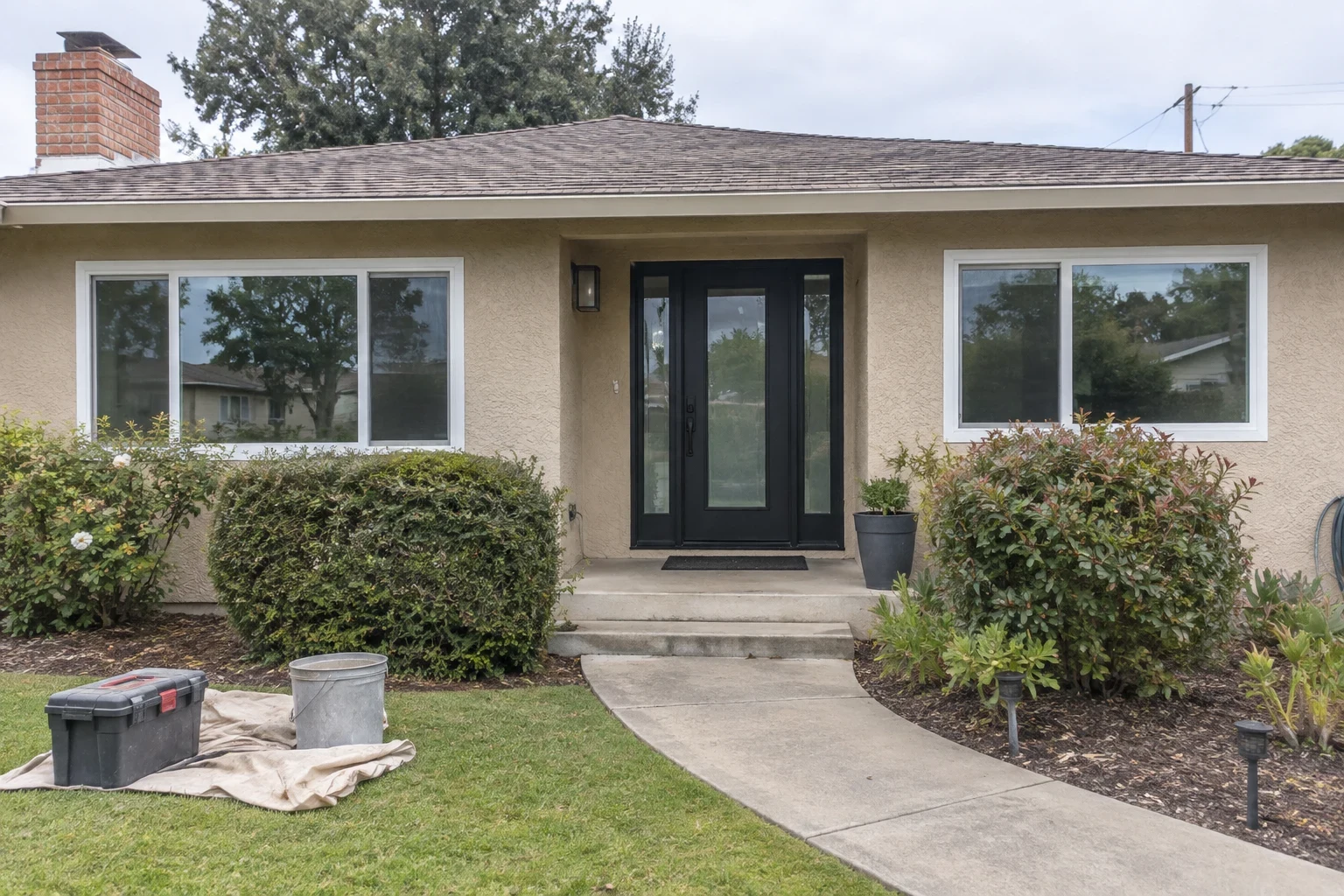
Matching is the main thing to think about. We pick a frame color and style that sits well next to your other windows so the new one does not stand out from the street. If you plan to replace more later, we note the sizes and product so the next ones match.
Is there a middle ground between a part and a full tear-out?
There is, and it suits a lot of homes here. Window retrofitting sets a new window inside the existing frame. The old sash and glass come out, the old frame stays in the wall, and the new window is fitted and sealed to it.
Most houses in this area have stucco walls. A full tear-out means cutting the stucco around the opening and patching it after. A retrofit usually leaves the stucco alone, so the job is quicker and less messy. It only works when the old frame is straight and solid, which we check during the estimate.
When the frame is damaged, a full window installation is the honest answer. That means removing the old frame, checking the opening, and setting a new window with proper flashing so it sheds water the next time it rains.
What we check before we recommend anything
We open and close each window, check the locks, and look at the frame corners and sill for gaps or corrosion. We look for fog between panes and for stains on the wall below, which point to water getting in. We also note which way the window faces, since a window taking afternoon sun has a different job than one on a shady side yard.
Then we give you a straight answer and a written estimate. Our own work is replacing the whole window, by retrofit or full installation. If your window only needs a small part and is otherwise fine, we will say so instead of selling you something you do not need.
More questions about replacing part of a window
Something not covered here? (626) 654-3121
Can I replace just the glass in a sliding glass door?
Sometimes, if the door frame and rollers are in good shape. On older aluminum sliders the track and frame are often worn too, and a sliding door replacement fixes the glass, the rolling and the seal at once.
Will one new window look different from the rest of my house?
It can if the color or frame style is off. We match the frame color and profile as closely as we can to your existing windows so it fits in.
Do I need a permit to replace one window?
It depends on the job and on the city. A retrofit and a full tear-out can be treated differently, so ask about it during your estimate and we will talk through what your project may involve.
Does a new window help with heat even if I only do one?
Yes, in that room. Energy efficient windows with dual-pane, low-E glass keep a lot of afternoon heat out, so starting with the hottest room is a common choice.
Not sure if it's one part or the whole window?
We'll come look at your windows, tell you plainly what's worn out, and give you a written estimate with no pressure and no obligation.