ServicesEnergy Efficient Windows
Energy Efficient Windows in South San Jose Hills
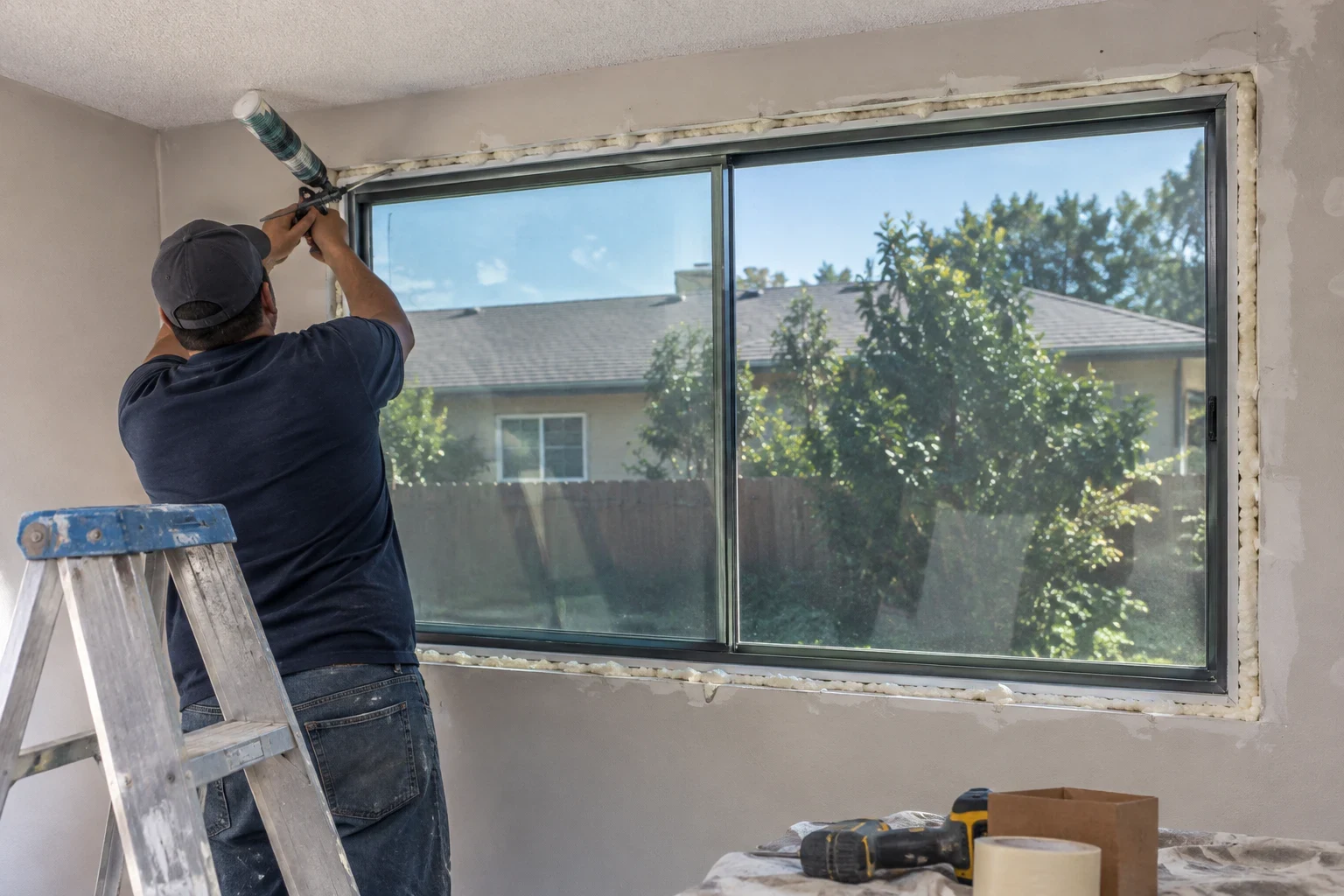
We swap old single-pane and leaky aluminum windows for dual-pane, low-E units that keep summer heat out and the cool air in. We measure every opening, pick glass for the side of the house it faces, and install it sealed tight.
What Makes a Window Energy Efficient
An energy efficient window has two panes with a sealed space between them, a thin low-E coating that bounces heat back, and a frame that does not soak up heat the way plain aluminum does. Most of the units we put in have argon gas in that space and a warm-edge spacer, which keeps the glass edge from sweating. Each one comes with an NFRC sticker showing its U-factor and solar heat gain rating. We explain what those two numbers mean for the room the window is going in.
Plenty of houses in this area went up in the 1950s and 60s with single-pane aluminum sliders. On a hot afternoon those frames feel warm under your hand, and the room behind them heats up fast. Changing them out is often the biggest single fix for a home that runs hot, and any new window has to meet California's Title 24 energy rules. Our company holds a CSLB C-17 license, and our installers have spent 30 years putting in windows, so we know which glass suits which side of a house.
What the Job Includes
Glass matched to each wall
The south and west sides of a house catch the most sun. On those walls we can use a coating that blocks more solar heat, and a lighter one on shaded sides, so each window does the job its wall needs without extra cost.
Vinyl frames with welded corners
The vinyl frames we put in have fused corners that stay tight. Vinyl does not carry heat into the room like bare aluminum, and it never needs paint.
Every opening measured
We measure each window on site and order it built to fit. Older houses settle and go out of square, so we check every opening rather than assume a stock size.
Insulation and caulk around the frame
Even a top-rated window lets air in if the gap around it is left open. We fill that gap with insulation, seal it, and caulk the outside edge to keep out hot wind and dust.
Energy code paperwork
The windows we order meet the state Title 24 energy rules, and we pull a permit when the job needs one. The NFRC stickers and paperwork are yours to keep.
Signs Your Windows Are Costing You
- One side of the house runs hot
- When a few rooms stay warm hours after the AC comes on, sun is likely pouring through plain glass. Low-E coatings take care of that first.
- Warm or cold metal frames
- Touch an aluminum frame on a sunny afternoon. If it is warm, the frame is carrying outside heat straight into your home.
- Haze trapped inside the glass
- Fog or water drops between the panes of a dual-pane window mean its seal has broken. The gas has leaked out, and the window now insulates little better than one pane.
- Dust and drafts at the sill
- A thin layer of dust inside the sill after a windy day means air is slipping past the frame or sash. Your cooled air leaks out through the same gaps.
- Fading near the windows
- Rugs, wood floors and couch cushions losing color by the glass are getting hit with UV. A low-E coating stops most of it.
How the Work Goes
- 1
We visit your home
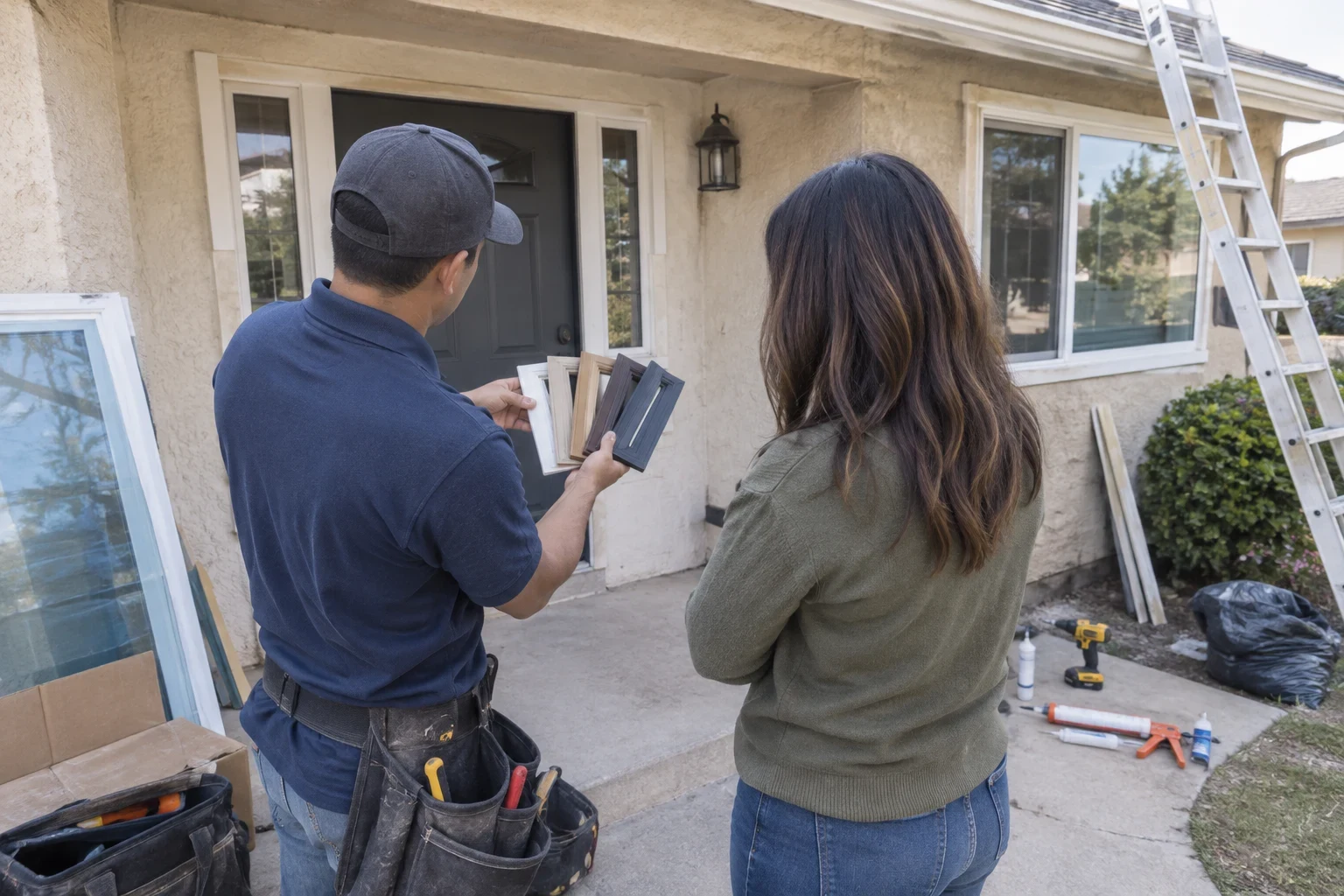
We walk around the house, look at each window, note which way it faces and take measurements. You get a written estimate listing every window and the glass we recommend. There is no pressure to sign that day.
- 2
Ordering and permits
When you are ready, we order the windows made to your sizes. If the job needs a permit, we file it while the windows are being built.
- 3
Install day
Floors and furniture near the work get covered first. We pull one old window, fit the new one plumb and level, and close that opening up before starting the next, so no room sits open for long.
- 4
Seal, test and clean up
Every frame gets insulated and caulked, and we open and lock each sash to make sure it works right. The old windows and scrap leave with us, and we go room by room with you before we pack up.
What Sets the Price
Energy efficient windows are priced one opening at a time, and every house has its own mix of sizes and styles. After we see your home, you get a written estimate with a line for each window. You will know what every opening costs before we order a thing, and we explain any line that is not clear.
- How many windows, and how big
- Each extra window adds glass, frame and labor. A wide living room picture window or a long slider costs more than a small window over the tub.
- The glass you pick
- Most homes do fine with a standard low-E coating and argon fill. A stronger sun-control coating for hot walls, or laminated glass to cut road noise, adds to the price.
- How the old frame comes out
- A retrofit install sets the new window inside the existing frame and leaves your stucco alone, which keeps the cost down. If the old frame is bent, rotted or out of square, a full-frame install takes more work, and we show you what we found before suggesting it.
- Window style and reach
- Sliders and single-hungs go in fastest. Casements, odd shapes and second-floor openings that need a tall ladder or scaffold add labor time.
Energy Efficient Window Questions
- Will new windows really lower my electric bill?
- In most homes they cut the heat that comes in through the glass, so the AC cycles less on hot days. The savings depend on what you have now, how many windows you change and how you set the thermostat. The biggest jump comes from going single-pane aluminum to dual-pane low-E. We will not quote you a savings figure we cannot stand behind.
- Do I need a permit to replace windows?
- Often yes. Replacement windows in California have to meet the Title 24 energy standards, and many jobs need a permit and a final check. We file it when your job calls for one and make sure the windows we order pass. You do not have to fill out any forms.
- Will the windows make my house quieter?
- Most of the time, yes. A sealed dual-pane unit stops a fair amount of traffic and street sound that single glass lets in. For a bedroom facing a busy road, ask us about laminated glass on that side.
- Do you have to tear out my stucco?
- Usually not. Most of our jobs are retrofits, where the new frame fits into the old opening and the stucco stays put. Our Window Retrofitting page explains how that works.
- How much experience does your crew have?
- Our company has 12 years in business. The people setting your windows bring 30 years of window installation experience between them, so old, out-of-square openings do not surprise us.
Find Out What Your Windows Are Costing You
We will look at every window, tell you which ones are worth replacing and give you the price in writing. No pressure and no obligation.